
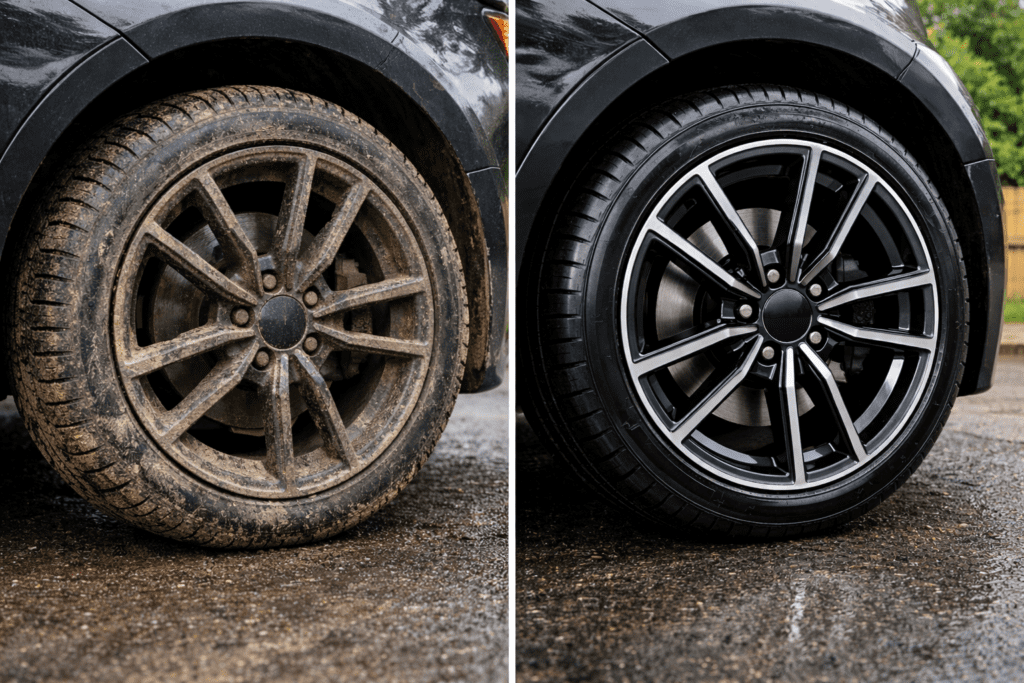
Your wheels take a beating. Brake dust, road salt, mud, tar — it all accumulates faster than you’d think, and most of it isn’t just ugly. Left sitting there, it can actually damage your rims and interfere with braking performance. So it’s really important to know how to clean wheels and tires.
Why Cleaning Your Wheels Actually Matters
Brake dust is more than grime. It’s metallic particles from your brake pads and rotors, and when it mixes with moisture and road salt, it becomes corrosive. Over time, that buildup eats into your wheel’s protective coating, causing pitting that can’t be buffed out.
Chrome wheels are especially vulnerable — the coating is softer and can be damaged permanently by hot brake dust. Even factory-finished alloy wheels will corrode if the buildup sits long enough.
Beyond the cosmetic damage, heavy buildup can coat brake components and create uneven braking surfaces. In extreme cases, corroded wheel threads make removing lug nuts nearly impossible during a roadside tire change. Regular cleaning prevents all of this.
How Often Should You Clean Your Wheels?
For most drivers, every two weeks is a solid baseline. If you drive in winter conditions with road salt, or in dusty areas, weekly cleaning makes more sense. Performance vehicles with high-output brake pads generate more dust and benefit from weekly attention too.
Here’s a useful shortcut: even if your car looks clean overall, your wheels probably don’t. They’re the first place dirt shows and the last place most people clean. A quick wheel-only wash takes 20 minutes and has an outsized visual impact.
What You Need (and What You Don’t)
You don’t need a garage full of products. Here’s what actually makes a difference:
The Essentials
Wheel cleaner
Look for a product designed specifically for wheels that’s safe for your rim finish. Most modern formulas are pH-neutral and won’t damage clear coats or painted surfaces.
Tire cleaner
A separate cleaner for tires cuts through rubber residue and old tire dressing more effectively than all-purpose soaps.
Brushes
You need at least two: a soft-bristled brush for the wheel face and a long-handled brush to reach behind the spokes. A small detailing brush helps with lug nuts and tight spots.
Microfiber towels
Dedicate a few towels specifically to wheels. Don’t use the same ones you use on paint — wheel grime can scratch.
Water source
A garden hose works. A pressure washer makes the job faster and reaches areas brushes can’t.
Worth Adding Later
Tire dressing
Adds that deep black finish and protects rubber from UV damage. Water-based formulas won’t sling onto your paint.
Wheel sealant
Applied every few months, it creates a barrier that repels brake dust and makes cleaning easier.
What to skip
Dish soap, household degreasers, and steel-bristle brushes. They’ll either leave residue, strip protective coatings, or scratch your finish.
How to Clean Your Wheels: Step by Step
Before you start: make sure your wheels are cool. Cleaning hot wheels can cause cleaners to dry too quickly and damage the finish. Work in shade if you can.
Step 1: Rinse Everything
Spray each wheel thoroughly with water to remove loose dirt and debris. Hit the tire sidewalls, wheel face, and wheel wells. This pre-rinse prevents loose grit from scratching your wheels when you scrub.
Step 2: Apply Wheel Cleaner
Spray cleaner generously over the entire wheel — face, spokes, lug nuts, and the inner barrel. Let it sit for 1–2 minutes to break down the grime. Don’t let it dry; if it starts to, mist it with water.
Step 3: Scrub the Wheel
Use your soft-bristled brush to scrub the wheel face in circular motions. Pay attention to the area around lug nuts and any recessed areas in the design.
Switch to your long-handled brush to clean the inner barrel — the curved surface behind the spokes. Use the small detail brush for tight spots around the valve stem.
Step 4: Clean the Tire
Spray tire cleaner on the sidewall and scrub with your stiff-bristled tire brush. Work the cleaner into the rubber until the foam turns white — that indicates the tire is clean.
Step 5: Rinse Completely
Flush all cleaner from every crack and crevice. Leftover product can damage the finish or leave spots. Spray from different angles to ensure full coverage.
Step 6: Dry the Wheels
Use clean microfiber towels to dry everything completely. This prevents water spots and gives a professional finish. An air blower helps remove water from hard-to-reach areas if you have one.
Step 7: Apply Tire Dressing (Optional)
Once dry, apply tire dressing to the sidewalls using an applicator pad. Work it in evenly and avoid getting any on the wheels. For a natural look, wipe off the excess. For a wet shine, let it sit.
Time-Saving Tips That Actually Work
Clean wheels before washing the rest of your car
This way, dirty wheel spray won’t land on your freshly cleaned paint.
Work one wheel at a time
Cleaner won’t dry on the other wheels while you’re working, and you can give each one proper attention.
Use a wheel sealant every few months
It creates a protective layer that repels brake dust and cuts your cleaning time nearly in half.
Check tire pressure while you’re there
You’ve already removed the valve cap for cleaning — take 30 seconds to check inflation.
Keep a dedicated kit
Store all your wheel brushes, cleaners, and towels in one bucket. You won’t waste time hunting for tools, and you won’t accidentally use wheel products on your paint.
Special Considerations for Different Wheel Types
Chrome wheels
Clean weekly if possible. Brake dust damages chrome faster than other finishes. Always use chrome-safe cleaners and never use acid-based products.
Matte finish wheels
Avoid wheel wax or polish — it’ll create unwanted shine. Be careful with tire dressing overspray. Dry thoroughly to prevent water spots from showing.
Custom or aftermarket wheels
Check the manufacturer’s cleaning recommendations first. Some finishes require specific products. When in doubt, test on an inconspicuous area.
Painted brake calipers
Use extra care around painted calipers. Harsh chemicals can damage the paint. A soft brush and mild cleaner work best.
Frequently Asked Questions
Can I use dish soap to clean my wheels?
The short answer is: NO. Dish soap can strip protective coatings and leave residue. Wheel-specific cleaners are formulated to remove brake dust without damaging finishes.
How long does the whole process take?
About 30–40 minutes for all four wheels once you’ve done it a few times. The first attempt takes longer; after that it becomes routine.
Do I need different products for tires and rims?
Yes. Wheel cleaners are formulated to remove metallic brake dust and are safe for wheel finishes. Tire cleaners are designed to cut through rubber residue and old dressing without damaging the rubber compound. Using the right product for each makes the job easier and safer.
Will cleaning my wheels improve braking performance?
Indirectly, yes. Heavy brake dust build-up on rotors and callipers can create uneven braking surfaces, which may cause vibration or noise. Keeping everything clean helps maintain consistent braking performance.
Can I use a pressure washer on my wheels?
Yes, and it’s actually one of the most effective tools for wheel cleaning. Use a wide spray pattern and keep the nozzle at least 6 inches away to avoid damaging the finish. Pressure washers are especially good at blasting out wheel wells and reaching the inner barrel.
The Bottom Line: A Small Effort That Pays Off
Clean wheels aren’t just about looks — though that’s a nice benefit. Regular cleaning prevents corrosion, maintains braking performance, and extends the life of your wheels by years.
The process takes about 30 minutes once you’ve got it down. That’s a small time investment for wheels that stay protected and look professional-level clean.
Start with the basics — proper cleaner, the right brushes, and a consistent schedule. As you get comfortable, add steps like sealant for easier maintenance.
Your wheels do hard work. Give them the attention they need, and they’ll keep your car looking sharp and performing well for years to come.