
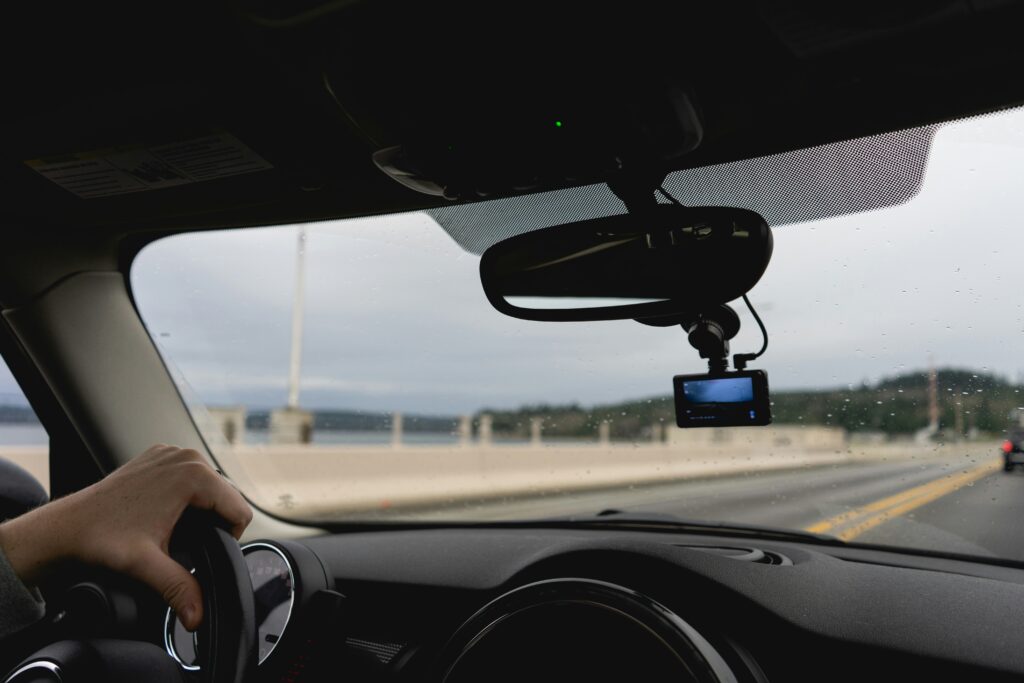
IIf you’re looking at the best dashcams under $100, you’re in what I call the “smart money zone”. You can absolutely get something that works—the difference between a good buy and a frustrating one comes down to knowing what actually matters at this price point.
Quick disclosure: Some links in this post are affiliate links. If you buy through them, I may earn a small commission at no extra cost to you.
What actually matters under $100 (skip this and you’ll waste your money)
1. Night performance separates the winners from the junk
Here’s the thing about budget dashcams: in daylight, almost all of them record great videos. The real test is night driving.
Here’s what you should realistically expect:
- Good footage in street-lit areas (most of your driving)
- Ability to capture what happened (lane positions, traffic lights, general movement)
- Readable license plates at reasonable distances in good lighting
What you probably won’t get: crystal-clear license plates on dark country roads at 60mph. That’s where you need to spend $150+.
2. Heat tolerance: the silent killer
If you live somewhere that gets hot—or even if you just park in the sun—this is HUGE.
Here’s what you need to know:
- Battery-based cameras can struggle with heat. Over time, batteries swell, lose charge, or just die faster.
- Capacitor-based cameras handle temperature extremes much better.
Not every listing makes this clear. If you live in Texas, Arizona, or anywhere that regularly hits 90°F+ (32, °C) look for “capacitor” in the description. If they don’t mention it? You’re taking a risk.
3. “Parking mode” is mostly hype at this price
Lots of dashcams claim to have parking mode. Here’s the reality: it usually depends on whether:
- You hardwire the camera (running cables properly to your fuse box).
- The camera’s power management actually works as advertised.
- It records usefully while parked (some just drain your battery).
Bottom line: Treat parking mode as a bonus, not a main feature—unless you’re ready to hardwire and potentially troubleshoot.
4. App quality matters more than people think
Some dashcams lean heavily on smartphone apps for setup and viewing footage. When it works, that is fantastic. When it doesn’t, you’ll get frustrated trying to set it up.
Common app problems:
- Won’t pair with your phone.
- Constant disconnections.
- Laggy video playback.
- Buggy firmware updates.
If you want “install and forget,” simpler is often better.
5. The memory card might be your biggest failure point
A dashcam is only useful if you can actually retrieve the footage when you need it.
Cheap memory cards corrupt files, fail early, or work fine for a month then die completely. If your dashcam doesn’t include a card (or includes some random no-name brand), spend $15-20 on a high-endurance microSD card from SanDisk or Samsung.
This is the best small upgrade you can make.
My minimum “good enough” checklist
Before I’d even consider a budget dashcam, it needs these basics:
The Must-haves:
- Loop recording (continuous recording, automatically overwrites old footage)
- Emergency lock / G-sensor (saves important clips so they don’t get overwritten)
- A mount that actually stays put (you’d be shocked how many cameras just fall off)
- Simple, clear controls (bonus points if you can set it up without reading a manual)
- Clear mention of heat design (battery vs capacitor)
Nice-to-haves (but don’t overpay):
- Wi-Fi for quick video transfers
- GPS tracking (rare at this price without compromises elsewhere)
- Dual camera setup (front + rear can be great, but watch for quality trade-offs)
Common traps at this price (what to avoid)
1. 4K claims that don’t deliver
Some listings plaster “4K” everywhere. Here’s the secret: resolution alone doesn’t mean better footage at budget prices.
If you see massive resolution claims for under $50? There’s a trade-off somewhere—usually in the sensor quality, processing, or night performance. Don’t get hypnotized by numbers.
2. Bundles that look too good to be true
Front camera + rear camera + memory card + mount + all for $45?
Ask yourself:
- Does the rear camera look like an afterthought? (Often it is)
- Is the included memory card a quality brand or generic trash?
- Do reviews mention freezing, rebooting, or corrupted files?
Sometimes bundles are genuine value. Sometimes they’re a way to package weak components together.
3. Parking mode with zero explanation
If a listing features parking mode but doesn’t explain power requirements or how it works, be skeptical.
Usually what it means: “This might work if you hardwire it, figure out the settings, and pray.”
How I chose these picks
I’m not going to pretend I lab-tested every dashcam on the market. These are marketplace picks based on:
- Realistic night performance expectations
- Ease of use (can normal people actually use this?)
- Heat and reliability concerns
- Feature claims vs likely real-world experience
- Actual value for the money
Three solid picks under $100 (available now)
Quick note: These are marketplace finds, not brand endorsements. I’m being realistic about what you’ll actually get.
Pick #1: Simple dual camera starter kit (front + rear, no app headaches)
Best for: People who want front and rear coverage without dealing with apps.
Why it made the list:
This is the kind of straightforward bundle that makes sense if you want to cover both angles without complexity. It includes a 64GB card, records in 1296P, and—critically—claims “no battery” design (better for heat).
What the listing claims: – Dual recording (front + rear) at 1296P – “NightVIS” technology – Wide view angle (105°-140° depending on variant) – No battery (capacitor-based for heat resistance) – Includes rear camera + 64GB microSD
Reality check: – “Night vision” means better footage in street-lit areas, not perfect clarity in pitch black – “No battery” is good for heat, but check if they specify capacitor design – View angle range is broad—make sure you’re selecting the right version
Trade-offs to accept: – No real parking mode claim, so treat this as a driving recorder – You’ll need to mount and cable-manage the rear camera yourself
Click here to Check it Out
Pick #2: Rearview mirror dashcam (Wi-Fi + parking mode, bigger screen)
Best for: Drivers who like the idea of a larger display integrated into their mirror.
Why it made the list:
Mirror-style dashcams feel more “built-in” and less obvious. This one claims Wi-Fi and parking mode, appealing if you want more features.
IMPORTANT: This listing has multiple variants with different specs. Double-check which version you’re linking to.
What the listing claims: – 16:9 screen ratio (wider viewing) – Wi-Fi connectivity – Parking mode capability – Rear camera included (some configs include 64GB card)
Reality check: – Parking mode works best when hardwired—budget implementations vary wildly – App/Wi-Fi features add convenience but also potential setup headaches – You’re getting more features, which means more complexity
Trade-offs to accept: – Confirm battery vs capacitor type if heat is a concern – Expect more setup time than a basic camera – Mirror placement might block part of your actual mirror
Click Here to Check it Out
Pick #3: Feature-loaded dashcam (4K UHD Recording Built in Wifi + GPS)
Best for: Tech enthusiasts who want an all-in-one solution and don’t mind complexity.
Why it made the list:
This is the “kitchen sink” option—combines multiple functions into one unit. Some drivers love this approach.
What the listing claims: – 170° view angle G-Sensor, Digital zoom, Radar Detector, Waterproof, Anti Fog, Anti Vibration, Real Time Surveillance, Automatic White Balance, wifi function, Parking Monitor,
Reality check:
- Parking mode likely needs hardwiring for reliability
- Multi-function devices mean more things that can go wrong
- More features = longer setup
Trade-offs to accept: – Built-in battery in hot climates = potential heat issues – Expect to spend time learning all the features – Some functions might be weaker than advertised – If one feature breaks, you might lose multiple functions
Click here to Check it Out
Quick comparison (pick based on your priority)
- If you want simple, reliable front + rear coverage? → Pick #1
- Or you’d prefer a bigger screen without too much complexity? → Pick #2
- Maybe you want maximum features and accept the complexity? → Pick #3
Prefer a known brand instead?
It’s true, these type of marketplace picks can be hit or miss.
If you’d rather go with an established dashcam brand for better firmware support and warranty coverage, you should look out for the more premium brands, including:
- Viofo
- Garmin
- Nextbase
- Rexing
You’ll probably spend a bit more, but you’re buying peace of mind.
Final thoughts
A dashcam under $100 can be a smart investment—if you go in with realistic expectations.
Focus on the fundamentals: – Reliable recording – Heat tolerance for your climate – Simple operation – Decent night performance in typical conditions
Treat fancy features as “nice if they work” rather than guaranteed functionality.
And please buy a quality memory card. Don’t let a $10 cheap card ruin your $80 dashcam investment.
Got questions about specific models or variants? Drop a comment below and I’ll do my best to help.
Last updated: February 4 2026
Note: Prices and availability subject to change. Always verify current specs before purchasing.