
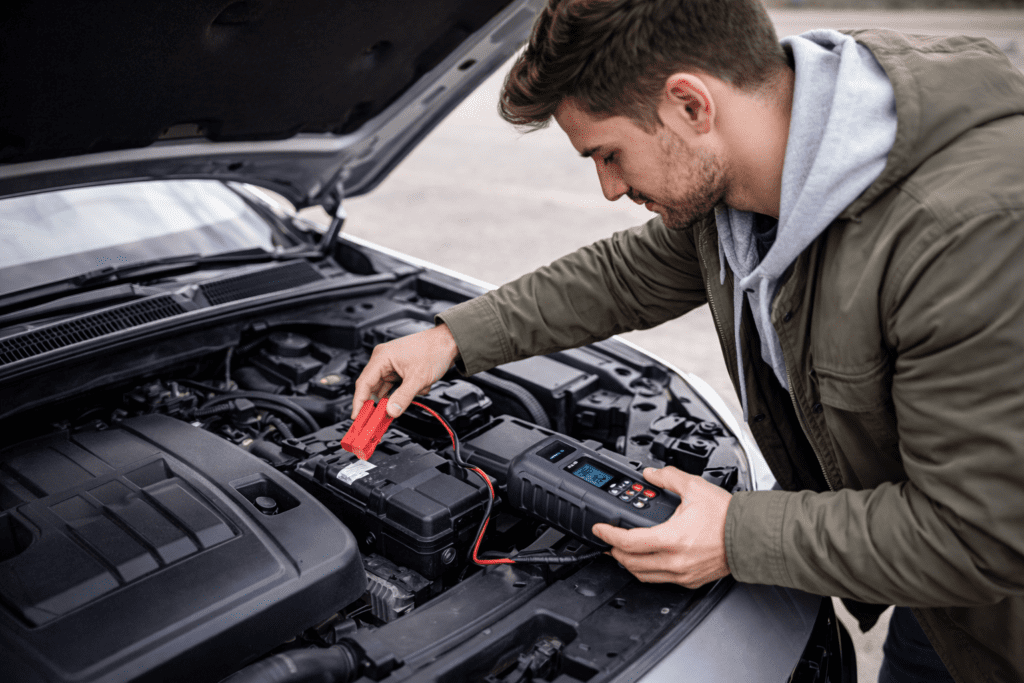
Picture this: you’re running late for an important meeting, you turn the key, and… nothing. Just that dreaded clicking sound. Your car battery’s dead, and there’s no one around to help. This is exactly when a portable jump starter becomes your best friend. So, let’s dive into portable jump starters 101.
Before You Buy: Two Habits That Make a Jump Starter Actually Useful
Before we get into features and specifications, two simple habits will ensure your jump starter is actually there for you in an emergency:
Learn the Safe Basics (5 Minutes Now Saves Hassle Later)
Take five minutes to read the quick-start guide and keep it stored in the carrying case. You don’t want to be figuring out instructions in the dark or in freezing weather.
Keep It Charged (Because It Slowly Discharges Over Time)
Here’s what catches most beginners: portable jump starters use lithium-ion battery packs, and even when switched off, they slowly lose charge over time. That means your fully charged unit in January might be at 40% by summer if you never check it.
The fix is simple: top up your jump starter once a month, or at minimum, check the charge level before road trips and at the start of winter.
What Is a Portable Jump Starter?
A battery jump starter is basically a rechargeable battery pack designed to deliver a high burst of current to start your car’s engine. Think of it as a portable battery.
The Real Benefits of a Portable Jump Starter
Convenience + Independence
The biggest advantage is self-sufficiency. Whether you’re in a parking garage, on a rural road, or just don’t want to bother your neighbors. You can handle a dead battery on your own terms.
Useful Beyond Jumping
Many jump starters include USB ports for charging phones, built-in flashlights, and even air compressors. These extras are genuinely handy—especially the flashlight when you’re connecting cables in the dark. However, don’t let these bonus features distract from the main purpose.
A jump starter that reliably starts your car is far more valuable than one with tons of gadgets but questionable jumping power.
Buying Checklist
Here are the six essentials that really matter when choosing a portable jump starter:
Matches Your Vehicle (This Matters Most)
The most important factor is choosing a jump starter clearly rated for your vehicle type and engine size. Read the product specifications and make sure your vehicle fits within the recommended range.
Built-In Safety Protections
Look for models with reverse polarity protection, which prevents damage if you accidentally connect the clamps backward.
Short-circuit protection and overload protection are equally important.
These safety features protect both you and your vehicle’s electrical system from mistakes.
Good Clamps and Solid Cables
Poor clamps are the number one reason jump starters don’t work. You need clamps that open wide enough to grip battery terminals securely and cables that are thick enough to handle the current.
Clear Instructions
A beginner-friendly manual makes a huge difference, especially in stressful situations. Look for brands that offer clear instructions, video tutorials, and customer support.
Established manufacturers with good reputations generally provide better documentation and stand behind their products if something goes wrong.
Easy Recharging
Since regular charging is essential, you want a model that’s simple to keep topped up. Most use standard USB-C or included wall adapters. Avoid units with proprietary chargers that would be hard to replace if lost.
Works in Your Climate
If you live in an area with extreme temperatures—either very hot summers or freezing winters—check the operating temperature range. Lithium batteries lose effectiveness in extreme cold, so units designed for wider temperature ranges will be more reliable.
How to Use a Portable Jump Starter Safely
Using a portable jump starter safely is straightforward when you follow the right sequence. These steps cover the safety basics and will work for most models, but always check your specific unit’s manual for any variations.
Park Safely and Prepare:
Make sure you’re in a safe location away from traffic. Turn on your hazard lights, and ensure your car is fully off—key out of the ignition, all accessories off.
Inspect the Battery Area
Open the hood and visually check the battery. Never attempt to jump a battery that’s visibly cracked, leaking, or swollen. Clean any corrosion from the terminals if needed.
Connect the Clamps
Follow your jump starter’s specific instructions, but the typical order is: positive (red) clamp to the positive battery terminal, then negative (black) clamp to an unpainted metal ground point on your car’s engine block—not directly to the negative battery terminal.
Ensure Solid Contact
Make sure both clamps are biting firmly onto clean metal surfaces. Wiggle them slightly to confirm they’re secure. A loose connection is the most common reason for failure.
Turn on the Jump Starter and Start Your Car
Power on the jump starter and attempt to start your car. Try short cranking attempts (3-5 seconds) rather than one long attempt. If it doesn’t start immediately, wait a minute between attempts.
Disconnect Promptly
Once your car starts, disconnect the clamps in reverse order: negative clamp first, then positive. Turn off the jump starter and store it safely.
Drive and Monitor
Drive your car for at least 15-20 minutes to recharge the battery. If this happens repeatedly, get your battery and alternator tested—a jump starter is for emergencies, not a long-term fix for a failing electrical system.
Common Mistakes Beginners Make (and Easy Fixes)
Most car jump starter problems come down to a handful of avoidable mistakes. Here’s what trips people up and how to prevent it.
Buying the Wrong Size for Your Vehicle
The most expensive jump starter won’t help if it’s underpowered for your vehicle. Buying based solely on flashy peak amp numbers or choosing the cheapest option without checking compatibility is a recipe for disappointment.
The Fix: Match the jump starter to your vehicle category and engine size. If you drive a small sedan, you don’t need a heavy-duty diesel unit. If you have a large truck, don’t cheap out on a compact car model. Read the specifications and reviews from people with similar vehicles.
Letting It Sit for Months Without Charging
Buying a jump starter, charging it once, and tossing it in your trunk for a year is a very common mistake. When you finally need it, you’ll find the battery is too depleted to help.
The Fix: Keep your portable jump starter topped up monthly or at least check it before winter and long trips.
Bad Clamp Connection
Even with a fully charged unit, if the clamps aren’t making solid metal-to-metal contact, power won’t transfer effectively. Corroded terminals, loose clamps, or attaching to painted surfaces all prevent proper connection.
The Fix: Clean battery terminals if they’re corroded. Reposition the clamps to ensure they’re gripping bare metal firmly. Give them a slight wiggle to test the connection. If your clamps are poor quality, consider upgrading to a better model or buy better aftermarket cables if compatible with your unit.
Repeated Long Cranking Without Pausing
Holding the ignition and cranking for 15-20 seconds straight, over and over, stresses both the jump starter and your car’s starter motor. If the car doesn’t start after a couple of attempts, continuing to crank isn’t likely to help.
The Fix: Use short cranking attempts of 3-5 seconds. If it doesn’t start after two or three tries, wait a minute and retry. If you still can’t start your car, check the troubleshooting section below.
Quick Troubleshooting If It Doesn’t Work
If your jump starter doesn’t work when you need it, here are the most likely reasons and quick checks:
Jump Starter Charge Is Too Low
Check the indicator lights. If it’s at 25% or less, it might not have enough power. This is why regular charging matters.
Clamps Aren’t Making Contact
Reposition them on clean, bare metal surfaces. A painted surface or corroded terminal won’t allow current to flow.
Car Battery Is Severely Damaged
If the battery is cracked, leaking, or completely dead (not just discharged), a jump starter can’t help. You’ll need a replacement battery.
It’s Not a Battery Issue
Sometimes the problem is the alternator, starter motor, or another component. If your battery is relatively new and this keeps happening, have a mechanic diagnose the real issue.
FAQs
Do I need a jump starter if my battery is new?
Yes, even new batteries can die unexpectedly. You might accidentally leave interior lights on overnight, or your battery could fail prematurely due to extreme weather or a faulty alternator. A jump starter is insurance for the unexpected.
How often should I charge a portable jump starter?
Ideally, once a month. At minimum, check and charge it before winter and before any long road trips.
Can I keep a jump starter in my trunk year-round?
Yes, you can but be aware that extreme temperatures reduce battery performance. If you experience very hot summers or freezing winters, consider bringing it inside during temperature extremes.
How many jumps can I get per charge?
This varies by model and vehicle type, but most quality jump starters can handle 10-20 jumps on a single charge for typical cars. Larger vehicles or extremely cold conditions will reduce this number. Always recharge after use.
What if my car keeps needing jumps?
Repeated dead batteries signal an underlying problem—usually a failing battery or a bad alternator. Get your vehicle’s electrical system tested professionally. A jump starter is for emergencies, not a substitute for repairs.
Conclusion
A portable jump starter is one of those tools you hope you’ll never need but are incredibly grateful to have when the moment comes. It transforms a stressful situation—being stranded with a dead battery—into a minor issue you can handle yourself in minutes.
Just make sure that you choose one that matches your vehicle, take five minutes to learn the basics before you need it, and keep it charged with a monthly check-in.
Avoid the common mistakes—wrong size, dead unit, poor connections, excessive cranking—and you’ll have a reliable backup plan whenever your battery decides to quit.